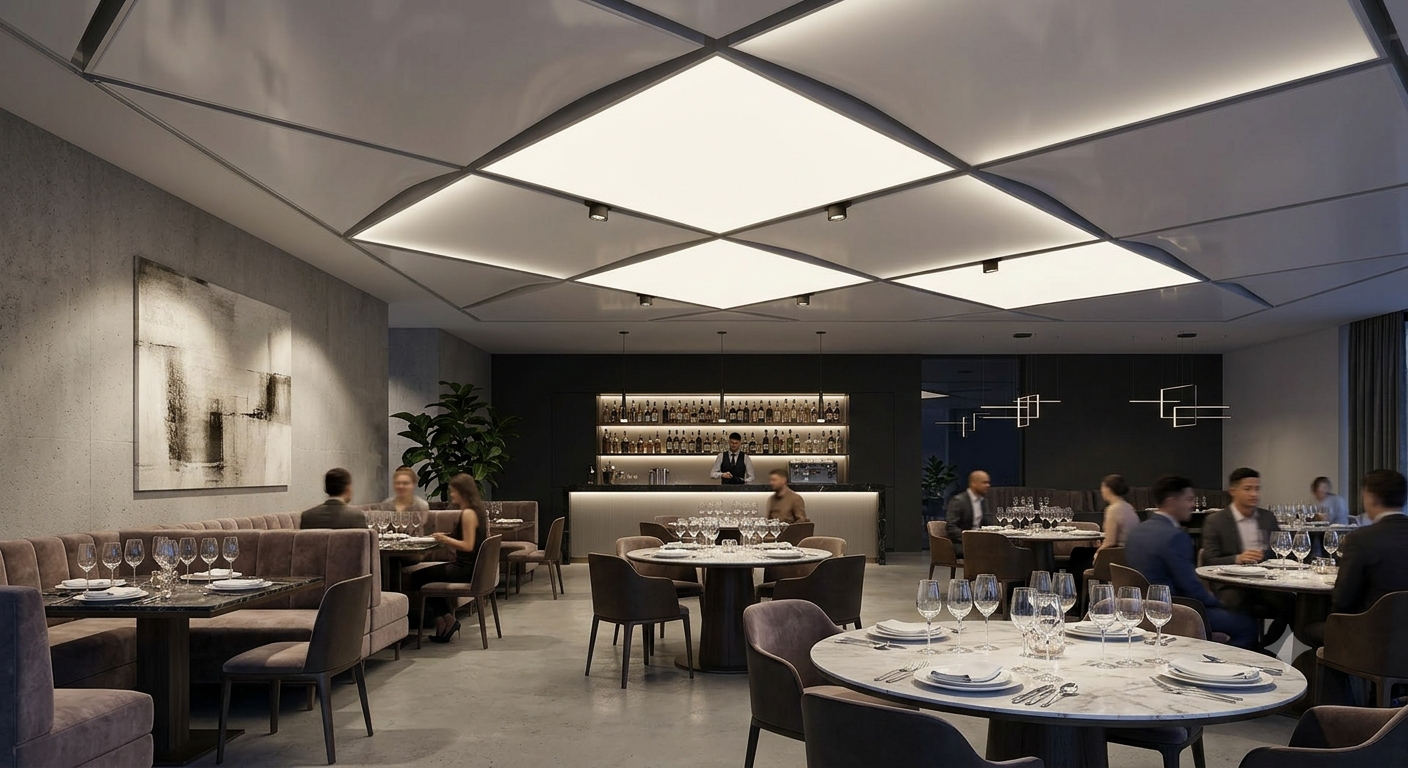
The right restaurant lighting ideas can make a dining space feel more welcoming, highlight the interior design and improve the overall customer experience. Lighting influences how guests perceive a restaurant, from the atmosphere around their table to the appearance of food, furniture and decorative features.
A well-planned restaurant lighting design balances comfort, visibility and style. Warm ceiling lights can create an intimate dining atmosphere, while layered lighting helps restaurants define different areas, such as the main dining room, private dining spaces, reception areas and counters.
Modern options such as concealed LED strips, decorative restaurant ceiling lights and a warm light stretch ceiling for a restaurant can also make lighting part of the interior architecture.
Although lighting alone cannot guarantee higher sales, a comfortable and memorable dining environment can support the experience restaurants want to deliver. Here are 10 restaurant lighting designs to consider when planning or renovating a dining space.
10 Restaurant Lighting Ideas for a Warm and Inviting Ambience
1. Warm Backlit Stretch Ceiling
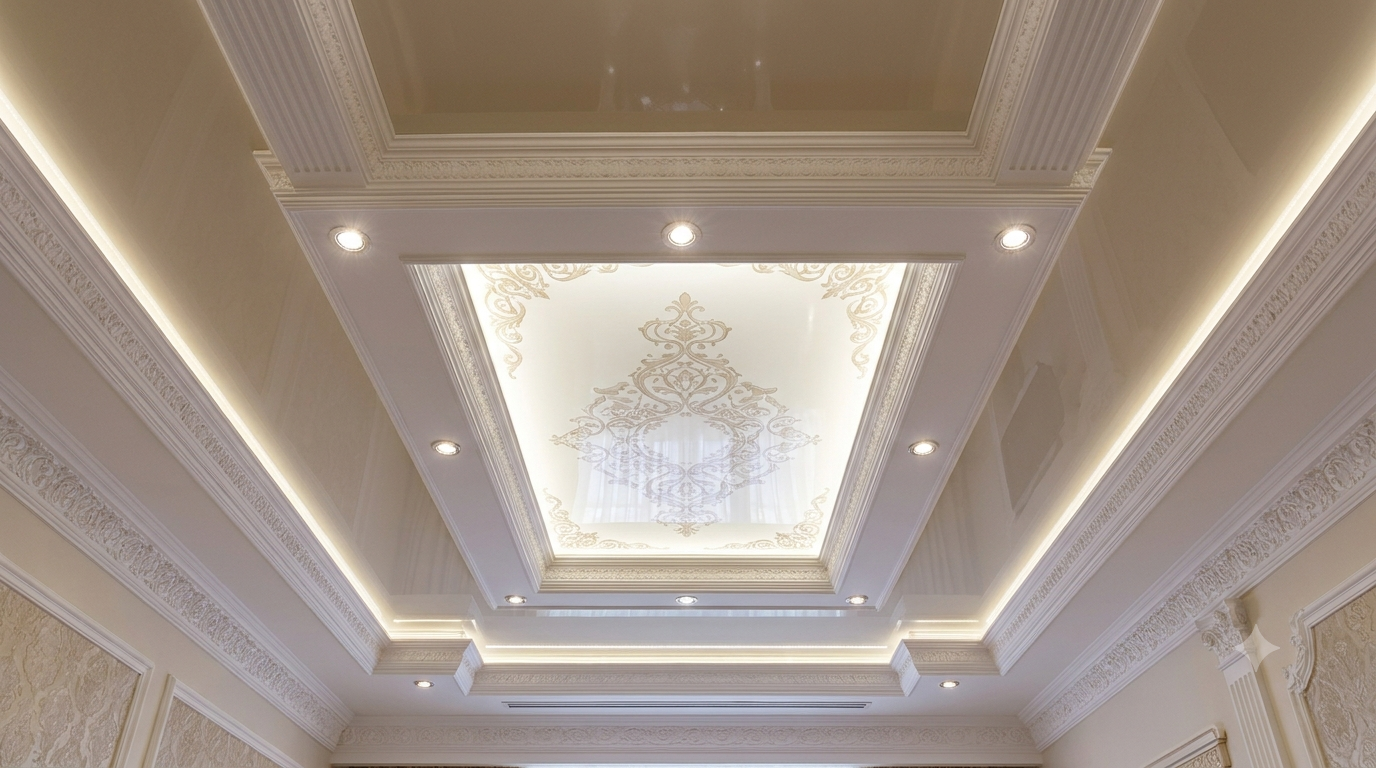
A warm backlit stretch ceiling combines a translucent ceiling membrane with LED lighting installed behind it. When illuminated, the ceiling creates a smooth, glowing surface that can make a restaurant feel contemporary and welcoming.
Warm-white lighting can complement wood, stone, neutral walls and other natural-looking finishes. Depending on the design, the illuminated ceiling can cover a large area or become a feature above a selected dining section.
Why consider this design?
Creates a distinctive ceiling feature.
Provides diffused illumination when correctly designed.
Complements contemporary and premium restaurant interiors.
Can be customised to suit different layouts.
Best for: Fine-dining restaurants, modern cafés, hotel restaurants and premium dining spaces.
Design tip: Select the membrane and LED colour temperature together. Ask for a lighting layout that demonstrates uniform illumination and minimises visible hotspots.
For customised illuminated ceiling options, explore stretch ceiling lighting solutions from Berrisol & Illusion Decors.
2. Cove Lighting for Restaurant Ceilings
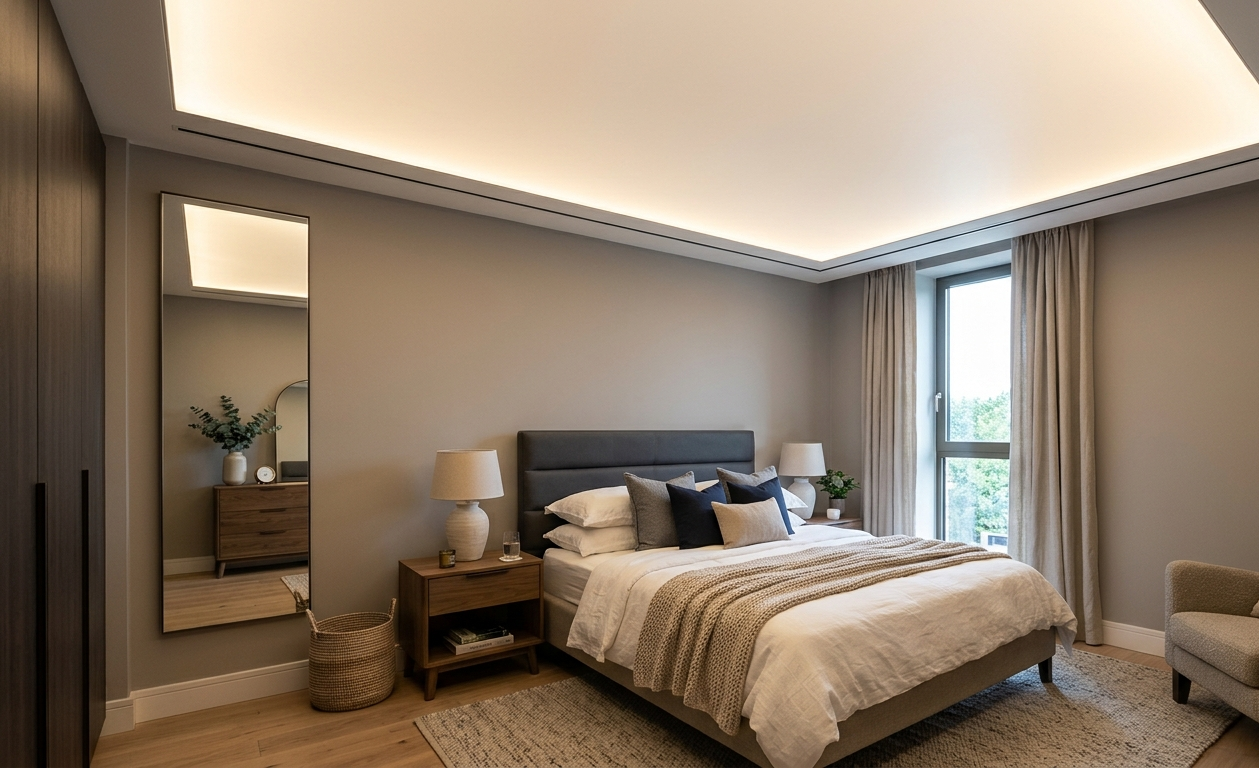
Cove lighting uses concealed LED strips installed within a recessed ceiling detail or architectural ledge. Instead of shining directly into the dining area, the light reflects off the ceiling or wall to create a softer visual effect.
This approach works well in restaurants that want a relaxed atmosphere without relying entirely on decorative pendant lights.
Benefits:
Creates gentle ambient lighting.
Adds depth to the ceiling design.
Works with contemporary and classic interiors.
Can be combined with table lighting and wall lights.
Best for: Casual dining restaurants, cafés, lounges and private dining rooms.
Design tip: Use warm-white LEDs for a relaxed atmosphere and provide separate lighting for areas where guests need stronger visibility, such as menus, counters and walkways.
3. Pendant Lights Above Dining Tables
Pendant lights are a familiar choice for restaurant interiors because they bring light closer to the table and create a visual focal point. They are available in many styles, including glass, metal, fabric and minimalist geometric designs.
A row of pendants can define a long communal table, while individual fixtures can add character to smaller seating areas.
Benefits:
Helps visually define individual tables or dining zones.
Adds decorative character to the interior.
Can direct light towards dining surfaces.
Offers a wide choice of shapes and finishes.
Best for: Bistro-style restaurants, cafés, casual dining spaces and private booths.
Design tip: Check the height and brightness of each pendant. Fixtures should illuminate the table without blocking views across the dining area or shining directly into guests' eyes.
4. Recessed LED Restaurant Ceiling Lights
Recessed LED lights sit within a suitable ceiling structure, creating a neat appearance with minimal visible hardware. They can provide general illumination across dining areas and support other decorative lighting features.
Their understated appearance makes them suitable for restaurants that prefer a clean ceiling design.
Benefits:
Creates a streamlined ceiling finish.
Can be arranged to suit the dining layout.
Works with a range of interior styles.
Can complement pendants and concealed lighting.
Best for: Modern restaurants, food courts, compact cafés and contemporary dining rooms.
Design tip: Avoid placing bright downlights directly above every table without considering the overall atmosphere. Use suitable beam angles and diffusers to reduce glare and harsh shadows.
5. Perimeter LED Lighting
Perimeter LED lighting runs along the edges of a ceiling, often within a concealed recess. It can create a floating-ceiling effect and visually separate the ceiling from the surrounding walls.
This design can add subtle sophistication without overwhelming the interior with decorative fixtures.
Benefits:
Creates a sense of depth around the ceiling.
Complements minimalist interiors.
Works with stretch ceilings and suitable false ceiling systems.
Provides a decorative layer alongside functional lighting.
Best for: Contemporary restaurants, premium cafés, hotel dining rooms and lounge-style spaces.
Design tip: Treat perimeter lighting as part of a layered lighting scheme. It may not provide enough illumination on its own for the entire dining room.
6. Wooden Ceiling with Warm LED Lighting
Wood and wood-look finishes can bring warmth and texture to restaurant interiors. When combined with carefully positioned warm-white LED lighting, they can create a comfortable setting that suits a range of dining concepts.
The lighting may be installed in concealed recesses, between ceiling elements or alongside selected architectural details.
Benefits:
Creates a warm, natural-looking interior.
Works with rustic, contemporary and nature-inspired designs.
Highlights ceiling textures and architectural features.
Can complement furniture and wall finishes.
Best for: Family restaurants, cafés, casual dining spaces and restaurants with natural or rustic interiors.
Design tip: Coordinate the light colour with the wood finish. Check the suitability of all ceiling materials for the installation environment and applicable fire-safety requirements.
7. Geometric LED Ceiling Designs
Geometric ceiling lighting uses linear fixtures or concealed LEDs to create patterns such as parallel lines, rectangles and intersecting shapes. These designs can give a restaurant a distinctive contemporary identity.
The pattern can be subtle or bold, depending on the restaurant's branding and interior concept.
Benefits:
Adds a modern architectural feature.
Can help visually define different areas.
Works well with minimalist furnishings.
Offers opportunities for customised ceiling layouts.
Best for: Contemporary restaurants, urban cafés, food halls and modern hospitality interiors.
Design tip: Keep the geometry consistent with the furniture arrangement and overall room proportions. A complicated ceiling pattern may overwhelm a small dining area.
8. Translucent Stretch Ceiling with Diffused Lighting
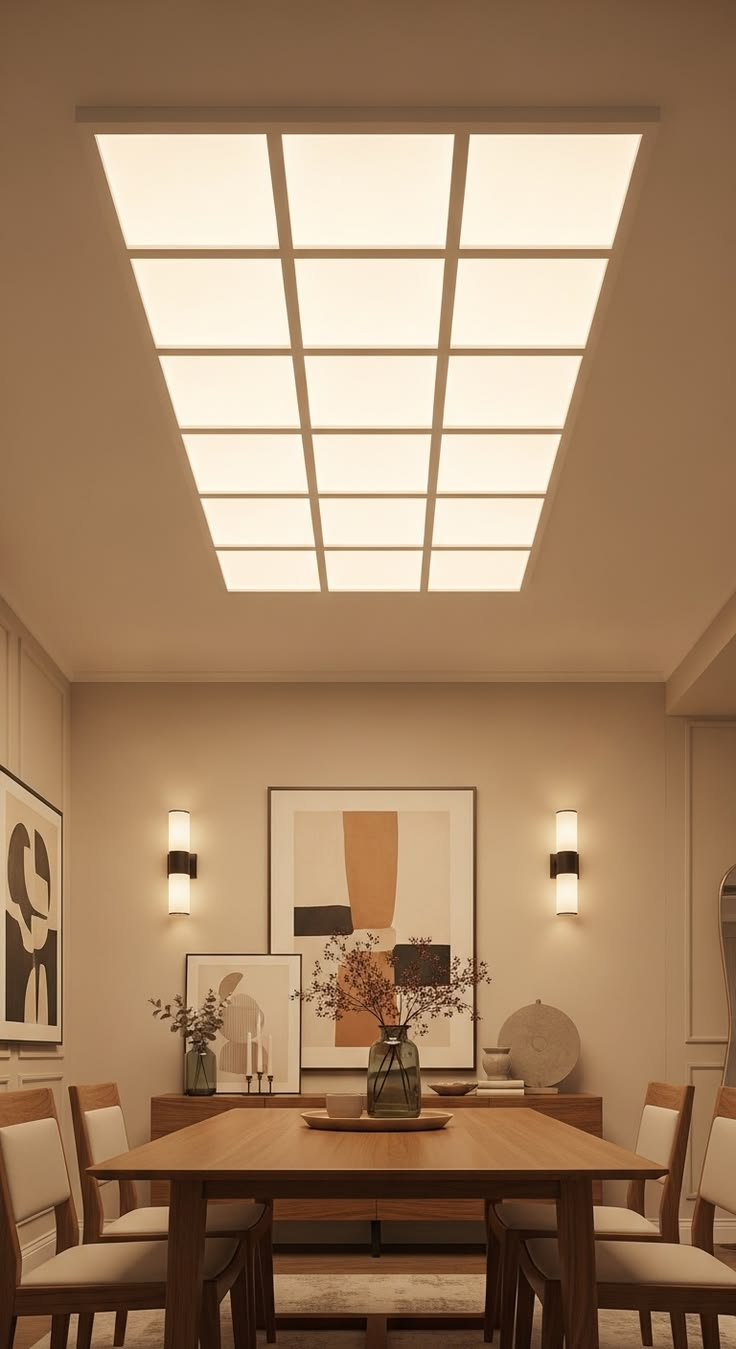
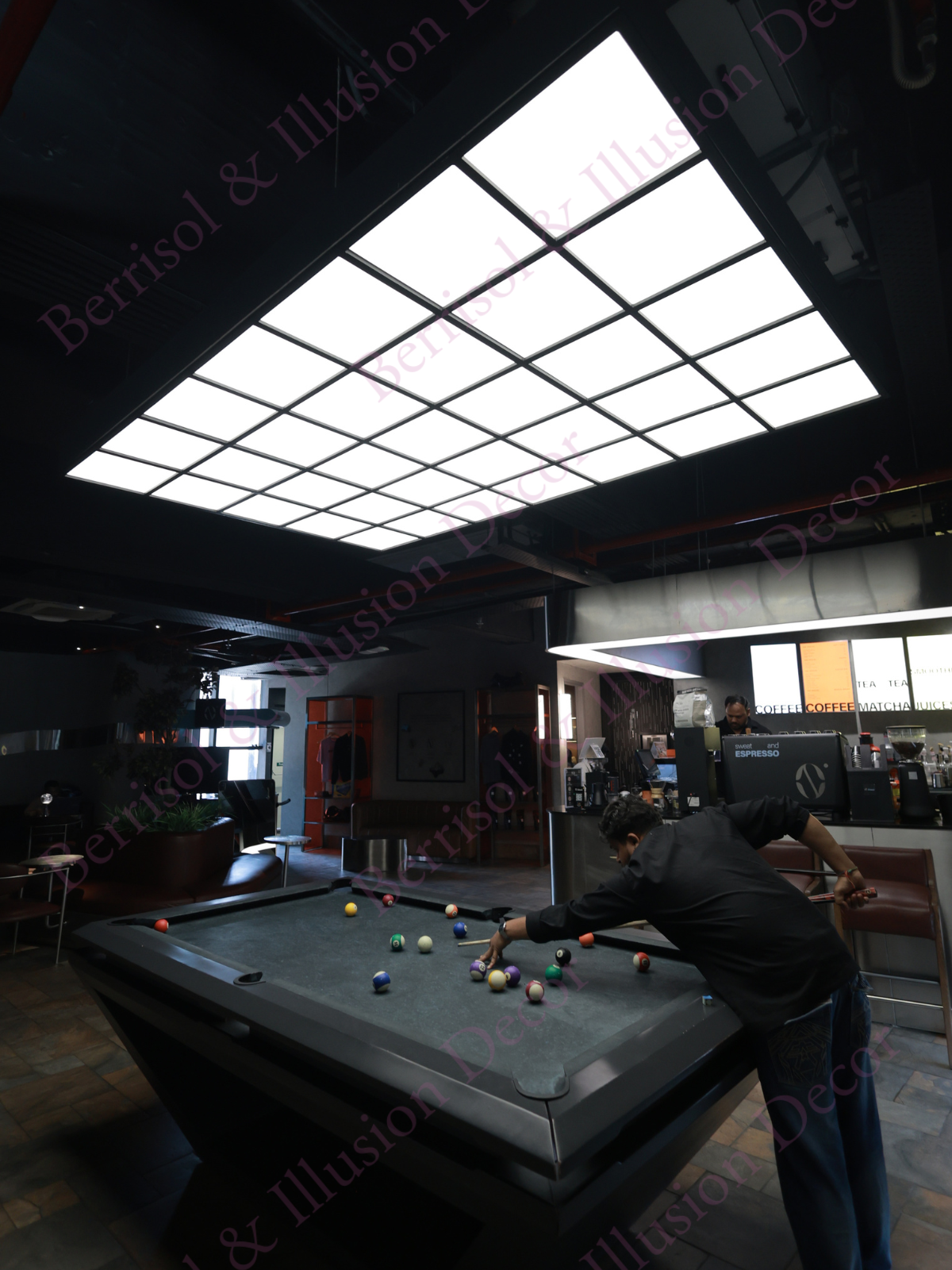
A translucent stretch ceiling allows light to pass through a specially selected membrane. When paired with an appropriately designed LED layout, it can create a broad illuminated surface with a smooth appearance.
This option can help establish a clean, contemporary aesthetic while reducing the visual clutter of multiple exposed fixtures.
Benefits:
Creates an illuminated ceiling feature.
Offers flexibility in ceiling shapes and layouts.
Can complement minimalist restaurant interiors.
Works well as part of a layered lighting scheme.
Best for: Hotel restaurants, modern dining rooms, reception areas and premium cafés.
Design tip: Check the membrane's light-transmission characteristics and the LED spacing. A suitable layout is important for reducing bright spots and uneven illumination.
Learn more about translucent stretch ceiling solutions.
9. Wall Lights Combined with Ceiling Lighting
Restaurant lighting does not need to come entirely from the ceiling. Wall lights can add visual interest and provide another layer of illumination around booths, corridors and feature walls.
When combined with ceiling lights, they help create a more balanced interior and can make different seating areas feel distinct.
Benefits:
Adds decorative detail at eye level.
Helps create a layered lighting arrangement.
Can highlight artwork, textures and wall finishes.
Offers another way to define seating zones.
Best for: Fine-dining restaurants, private dining rooms, cafés and lounge-style restaurants.
Design tip: Select wall fixtures that complement the ceiling design. Avoid exposed bulbs or strong light sources that cause glare for seated guests.
10. Layered Lighting for Different Dining Zones
Layered lighting combines general illumination with decorative, accent and task lighting. It is one of the most flexible approaches because restaurants often need different lighting levels in different areas.
For example, a dining room may use warm ambient ceiling lighting, pendants above tables and accent lighting for artwork. A service counter may need brighter functional lighting, while the entrance may use a decorative feature to create a welcoming first impression.
Benefits:
Supports different activities within one restaurant.
Creates visual contrast and depth.
Separates functional lighting from decorative effects.
Allows selected areas to be adjusted independently.
Best for: Restaurants with multiple seating areas, large dining rooms, hotel restaurants and mixed-use hospitality spaces.
Design tip: Consider separate lighting controls for the dining room, entrance, counter and decorative features. This makes it easier to adjust the atmosphere to different times of day.
How to Choose the Right Restaurant Ceiling Lights
Choosing restaurant ceiling lights requires more than selecting an attractive fixture. The lighting should support the restaurant's concept, seating arrangement and everyday operations.
1. Choose a Suitable Colour Temperature
Warm-white lighting is often used in restaurants to create a relaxed and intimate atmosphere. However, the ideal colour temperature depends on the concept, finishes and type of dining experience.
A fine-dining restaurant may prefer softer ambient lighting, while a bright café or fast-casual space may require a more balanced combination of warm ambience and functional illumination.
2. Consider Light Distribution
The dining area should feel comfortable without harsh bright spots or excessively dark corners. Use fixtures, diffusers and ceiling layouts that distribute light appropriately across tables and circulation areas.
3. Plan Lighting Around the Seating Layout
Position pendants and other fixtures according to table placement. Consider how guests see one another across tables and whether the fixtures interfere with sightlines.
4. Combine Ambient and Functional Lighting
Decorative lighting creates atmosphere, but staff also need adequate visibility for serving, cleaning and operating the restaurant. Entrances, counters, service areas and walkways may require different lighting from the main dining room.
5. Consider Dimming and Controls
Dimmable lighting can help restaurants adjust the atmosphere for lunch, dinner or special events. Confirm that the LED drivers, controls and fixtures are compatible with the intended dimming system.
6. Check Maintenance Requirements
Restaurant lighting operates for extended periods in many settings. Consider the accessibility of drivers, the availability of replacement components and how the fixtures can be cleaned and maintained.
Warm Light Stretch Ceiling Restaurant Design: Is It Worth Considering?
A warm light stretch ceiling can be a useful option for restaurants that want a distinctive illuminated ceiling without relying entirely on visible light fixtures.
The translucent membrane diffuses light from LEDs installed behind it, creating a smooth surface that can complement modern furniture, textured walls and carefully selected decorative features.
It may be particularly suitable for premium dining rooms, hotel restaurants, contemporary cafés and reception spaces.
However, the system should be designed around the restaurant's lighting needs. The membrane, LED layout, ceiling height, electrical access and installation environment all affect the final result.
Before choosing a warm light stretch ceiling, ask the supplier about:
Membrane options and light-transmission characteristics.
LED layout and expected light distribution.
Compatibility with additional table and accent lighting.
Access for future electrical maintenance.
Material specifications and relevant safety documentation.
The complete installation scope and quotation.
Explore stretch ceiling lighting options from Berrisol & Illusion Decors to discuss whether an illuminated ceiling fits your restaurant design.
Common Restaurant Lighting Mistakes to Avoid
Even attractive fixtures can create an uncomfortable dining environment when the lighting is poorly planned.
Using only bright overhead lights: This can make the dining room feel harsh rather than inviting.
Making the room too dark: Guests still need to read menus, see food clearly and move safely.
Ignoring glare: Exposed bulbs and poorly positioned fixtures can shine directly into guests' eyes.
Using inconsistent colour temperatures: Mixing very different light colours without a plan can make the interior feel visually disconnected.
Overlooking service areas: Staff need appropriate lighting for serving, cleaning and preparing orders.
Choosing fixtures before finalising the layout: Lighting should work with the seating plan, ceiling design and interior finishes.
Ignoring maintenance access: Difficult-to-reach drivers or fixtures can complicate future repairs.
The goal is to create an atmosphere that feels intentional while keeping the restaurant practical for both guests and staff.
Why Consider Berrisol & Illusion Decors for Restaurant Ceiling Lighting?
The ceiling can play an important role in a restaurant's overall lighting design. A suitable stretch ceiling system can provide a smooth finish, support integrated lighting and help establish a distinctive visual identity.
Berrisol & Illusion Decors offers stretch ceiling and lighting solutions for residential and commercial interiors. For restaurant projects, the team can discuss whether backlit, translucent or customised ceiling options suit the proposed design.
When planning your project, discuss the ceiling dimensions, desired light colour, membrane finish, illumination requirements and installation conditions. Request an itemised quotation that clearly identifies the included materials, lighting components and installation work.
You can review the company's stretch ceiling lighting solutions or visit the contact page to discuss your requirements.
Conclusion
The best restaurant lighting ideas balance atmosphere, comfort and practical visibility. From warm backlit stretch ceilings and concealed cove lighting to pendant lights and layered ceiling designs, each option offers a different way to shape the dining experience.
Warm lighting can help create an inviting atmosphere, while carefully planned illumination ensures that tables, walkways and service areas remain functional. For restaurants looking for a modern architectural feature, a warm light stretch ceiling may be worth considering alongside other lighting options.
Before selecting a design, evaluate the restaurant's concept, seating layout, maintenance requirements and lighting budget. A coordinated plan is more effective than choosing decorative fixtures without considering how the entire space will work.
Planning a restaurant ceiling upgrade? Explore stretch ceiling lighting solutions from Berrisol & Illusion Decors and discuss the right design for your dining space.