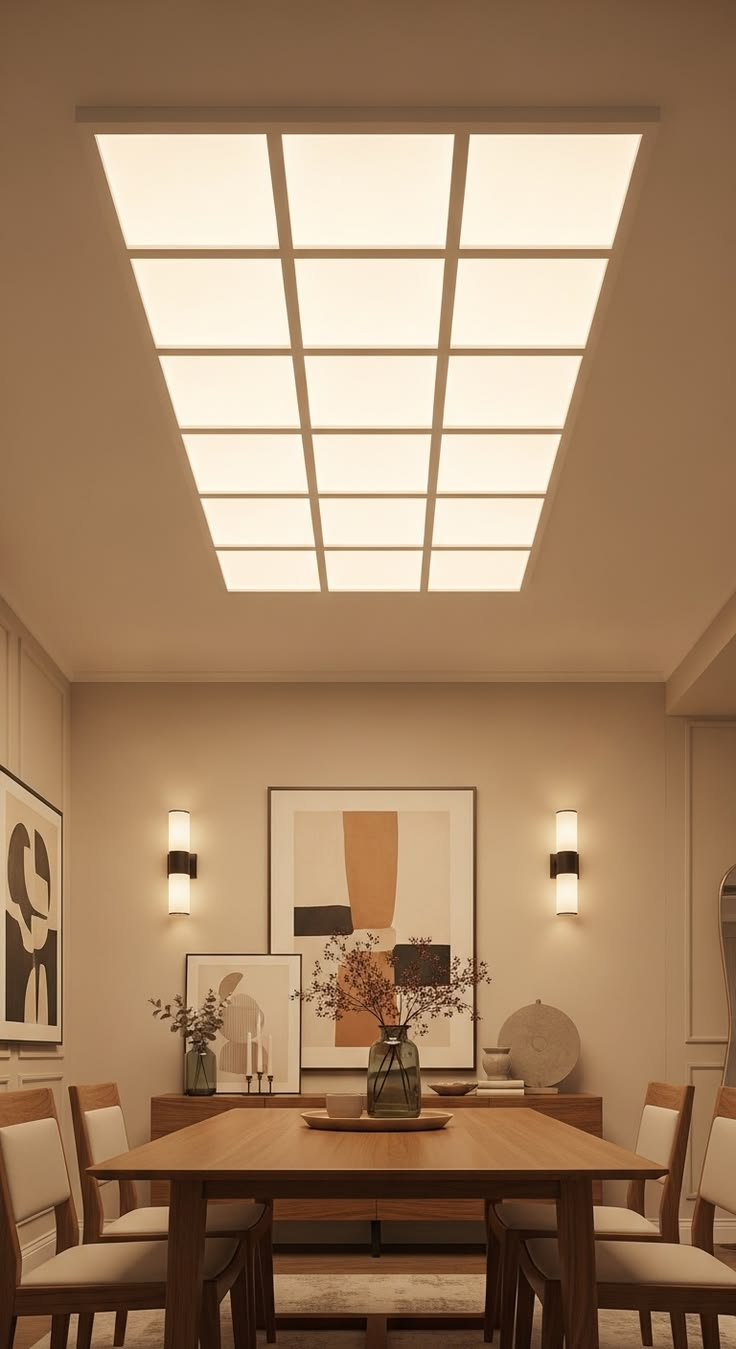
The right lighting can transform your living room from a simple everyday space into a warm, welcoming and stylish part of your home. Whether you prefer a minimalist interior, a contemporary family lounge or a luxurious living area, carefully planned lighting improves the room’s appearance, comfort and functionality.
The best living room lighting ideas combine ambient lighting for overall brightness, task lighting for specific activities and accent lighting to highlight architectural features or décor. Modern ceiling solutions, including LED profiles, recessed lights and luminous stretch ceilings, offer additional ways to create a clean, coordinated look.
In this guide, we explore 15 modern living room ceiling light designs, explain how to choose the right lighting for your space and share practical tips for achieving a balanced result.
Why Is Living Room Lighting Important?
Living room lighting does more than illuminate a space. It influences the atmosphere, highlights interior finishes and helps different areas serve their intended purpose.
For example, a living room used for family gatherings, reading, watching television and entertaining guests needs more than one central ceiling light. A combination of ceiling fixtures, indirect lighting and decorative lamps can make the room more adaptable throughout the day.
Well-planned lighting can help you:
Create a warm and inviting atmosphere for family and guests.
Make a small living room feel more open and visually balanced.
Highlight artwork, textured walls and architectural details.
Reduce harsh shadows by distributing light more evenly.
Add a modern appearance without overcrowding the ceiling.
For a coordinated interior, explore modern stretch ceiling solutions that can complement your furniture, wall finishes and lighting layout.
15 Modern Living Room Lighting Ideas for Your Home
1. Recessed LED Ceiling Lights for a Clean, Modern Look
Recessed LED lights are a popular choice for contemporary living rooms because they provide illumination without adding bulky fixtures to the ceiling. Their discreet appearance works particularly well in minimalist interiors, compact apartments and rooms with clean architectural lines.
Install them in a planned layout rather than placing them randomly. The spacing should account for the ceiling height, light output, furniture arrangement and areas that need brighter illumination.
Best for: Modern apartments, minimalist living rooms and understated interiors.
2. Luminous Stretch Ceiling for a Seamless Glow
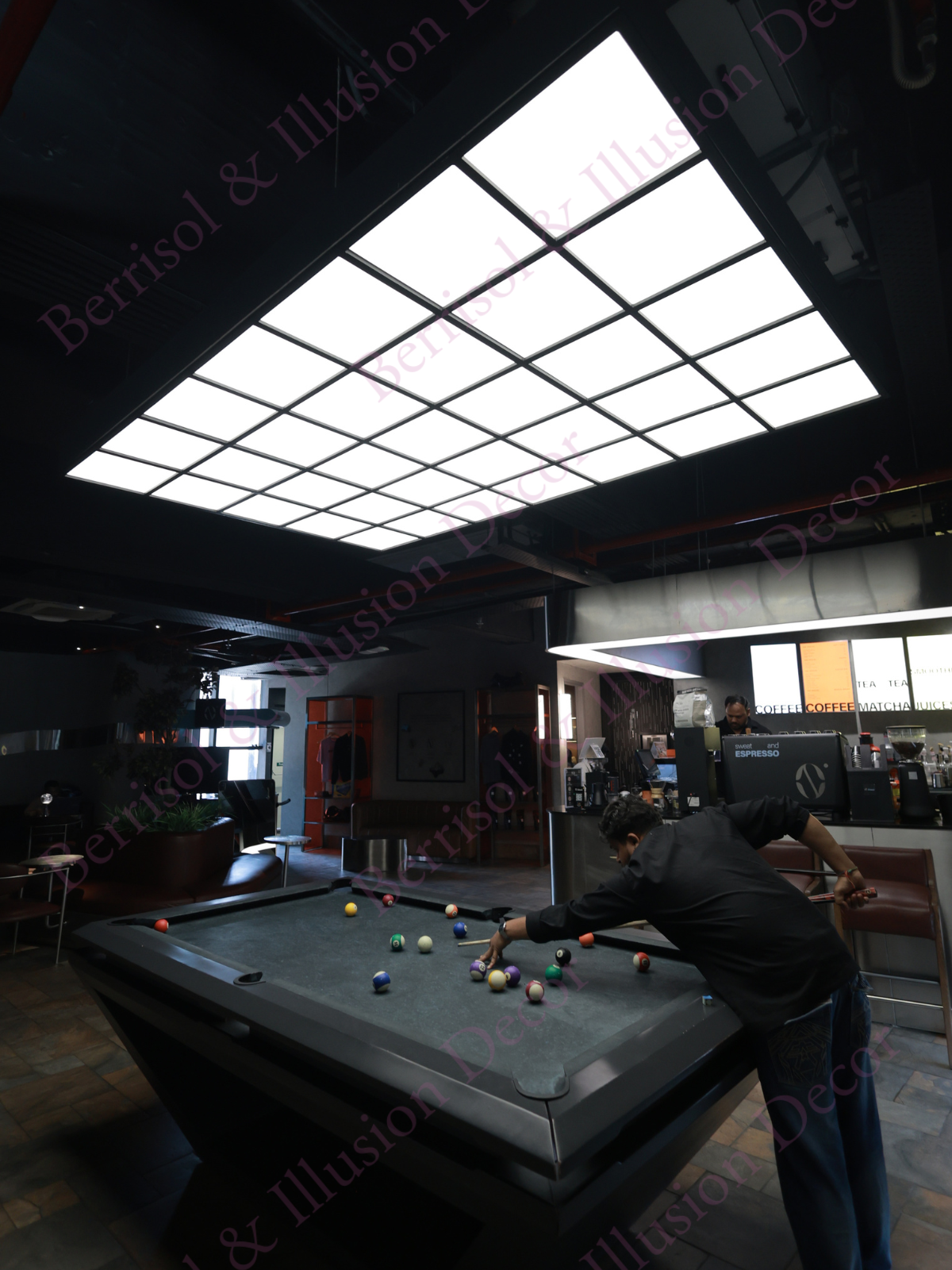
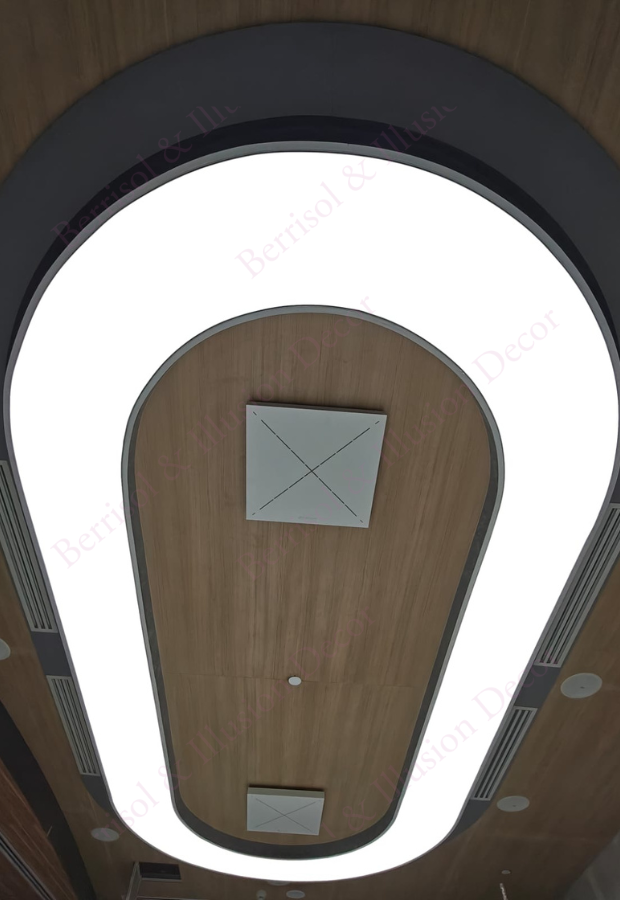
A luminous stretch ceiling creates a distinctive lighting effect by illuminating a translucent ceiling membrane with lighting installed above it. Instead of seeing individual light sources, you see a broad, glowing surface that can make the ceiling a central design feature.
A luminous stretch ceiling living room design is particularly effective when you want soft, distributed light and a contemporary finish. Depending on the layout and lighting system, the ceiling can provide general illumination or work alongside other fixtures.
The final appearance depends on the membrane, LED arrangement, ceiling dimensions and lighting controls. Professional planning helps achieve consistent brightness across the surface.
Learn more about translucent stretch ceiling solutions for illuminated ceiling designs.
3. Cove Lighting for Soft, Indirect Illumination
Cove lighting is installed in a recessed edge, ledge or concealed ceiling detail so the light reflects off the ceiling or wall instead of shining directly into the room.
This creates a softer atmosphere than relying entirely on exposed fixtures. It is a useful option for living rooms where comfort and visual simplicity are priorities.
Cove lighting can be combined with recessed lights to provide both gentle ambient illumination and brighter light when required. Choose dimmable LEDs where compatible with the installed system.
Best for: Relaxed evenings, contemporary interiors and layered lighting schemes.
4. False Ceiling Lights for the Hall and Living Area
False ceiling lights hall designs can help define the appearance of an open-plan living room or a separate lounge. A false ceiling provides space for recessed spotlights, concealed LED strips and selected decorative fixtures.
For a balanced design, use brighter functional lighting where needed and softer indirect lighting around the edges. Avoid installing too many spotlights simply to fill the ceiling, as excessive fixtures can create glare and a cluttered appearance.
If you are considering alternatives to conventional false ceilings, a stretch ceiling can also provide a smooth finish and accommodate selected lighting arrangements.
Explore the stretch ceiling lighting options available for different interior styles.
5. LED Strip Lighting Around the Ceiling Perimeter
LED strip lighting can create a subtle outline around the living room ceiling. When installed in a concealed profile or suitable ceiling detail, it adds depth without making the light source the main visual focus.
Warm white lighting is often suitable for a relaxed residential atmosphere, while neutral white may work better in interiors that favour a brighter, more contemporary appearance.
For the best result, select quality LED strips, compatible drivers and suitable diffusers. Ensure that the installation allows appropriate heat management and access for maintenance.
6. A Statement Chandelier for a Luxury Living Room
A chandelier can act as the visual centrepiece of a living room. Modern designs range from sculptural rings and geometric forms to understated glass and metal fixtures.
Choose a chandelier that suits the room’s proportions. A large fixture can overwhelm a compact space, while a very small one may look out of place in a spacious lounge.
Position the chandelier in relation to the seating area or the room’s main architectural axis. If it is intended to provide general lighting, check that its light output is sufficient or supplement it with other sources.
Best for: High ceilings, formal living rooms and statement interiors.
7. Layered Lighting for Everyday Flexibility
Layered lighting combines several types of illumination rather than depending on a single ceiling fixture. It is one of the most versatile modern living room lighting approaches because it supports different activities and moods.
A practical combination might include:
Ambient lighting from a luminous ceiling, cove lighting or ceiling fixtures.
Task lighting from a floor lamp beside a reading chair.
Accent lighting directed towards artwork, shelving or textured walls.
Each layer should have a clear purpose. Where possible, use separate switches or compatible dimmers so you can adjust the atmosphere without illuminating every part of the room equally.
8. Linear LED Lights for a Contemporary Interior
Linear LED fixtures create a clean, architectural look. They can be installed as surface-mounted fixtures, suspended lights or integrated profiles, depending on the ceiling design.
Straight lines can complement modern furniture, long walls and open-plan layouts. More creative arrangements, such as parallel lines or intersecting profiles, can make the ceiling a design feature.
Plan their placement around the room’s proportions and seating layout. A carefully positioned linear light can provide useful illumination while keeping the overall design simple.
9. Backlit Stretch Ceiling for a Soft, Even Effect
A backlit stretch ceiling uses lighting above a translucent membrane to produce a luminous surface. Depending on the design, the illuminated area may cover the full ceiling or a selected section.
This approach is useful when you want a smooth ceiling appearance without a collection of visible fixtures. It can also work with complementary lighting around the room’s perimeter.
The key is uniform light distribution. LED positioning, spacing, brightness and the properties of the membrane all affect the finished result. A lighting plan should be developed before installation to minimise visible bright and dark patches.
Discover custom lighting solutions for Berrisol ceilings for more ideas on coordinating illuminated ceiling features with your interior.
10. Track Lighting for Flexible Illumination
Track lighting is a practical option when you want to direct light towards different parts of the living room. Individual fixtures can be positioned to illuminate artwork, bookshelves, decorative objects or selected seating areas.
It is especially useful in modern interiors that display paintings or have distinct functional zones. Choose a track style that complements the rest of the room rather than treating it as a separate design element.
Avoid pointing adjustable fixtures directly towards television screens or reflective surfaces, as this can create distracting glare.
11. Recessed Spotlights to Highlight Artwork and Walls
Recessed spotlights can be used to draw attention to selected features, such as an artwork collection, a decorative wall or an architectural niche.
Their placement matters as much as their appearance. Consider the beam angle, distance from the wall and direction of the light to prevent unwanted shadows or uneven bright spots.
For a more comfortable living room, combine accent spotlights with softer ambient lighting. This helps the highlighted features stand out without making the entire room feel overly bright.
12. Cove Lighting with a Central Decorative Fixture
You do not have to choose between indirect lighting and a decorative ceiling light. Combining both can create a layered design with a clear focal point.
For example, concealed LED lighting can provide a soft perimeter glow while a pendant or chandelier adds visual interest above the seating arrangement. Recessed lights can be added where more functional illumination is needed.
Keep the decorative fixture proportionate to the room and avoid competing lighting patterns. A few coordinated elements usually look more refined than several unrelated designs.
13. Smart LED Lighting for Adjustable Ambience
Smart lighting can make a living room more adaptable by allowing you to adjust brightness and, where supported, colour temperature through compatible controls.
You might prefer brighter lighting for cleaning or reading, then switch to a softer setting for watching a film or relaxing with family.
Smart bulbs, compatible LED drivers and lighting-control systems are not always interchangeable. Check compatibility before purchasing and ensure the installation supports the intended dimming or control method.
For most homes, reliable everyday operation and comfortable light quality should take priority over adding unnecessary features.
14. Cove and Wall-Washer Lighting for Textured Walls
Wall-washer lighting directs light across a wall to emphasise its finish. It can make stone, decorative plaster, wood-look panels and other textured surfaces more noticeable.
When combined with cove lighting, it can create a coordinated relationship between the ceiling and the walls. This is particularly effective in living rooms where a feature wall forms the backdrop to the sofa or television.
Use suitable fixture spacing and beam angles to achieve the intended effect. Test the lighting where possible, as grazing light can reveal surface imperfections that may not be obvious under general illumination.
15. A Minimalist Ceiling with Integrated Lighting
For homeowners who prefer a simple interior, integrated ceiling lighting offers a way to keep the overall appearance uncluttered. Recessed fixtures, concealed LED profiles and selected luminous ceiling sections can work together without requiring a large decorative fitting.
This approach suits neutral colour palettes, streamlined furniture and rooms where the ceiling should complement rather than dominate the design.
A minimalist ceiling still needs thoughtful planning. Consider the room’s dimensions, the amount of natural daylight, wall colours and the position of the main seating area before deciding on fixture locations.
How to Choose the Right Living Room Ceiling Lights
With so many living room lighting ideas available, the best option depends on the size, layout and purpose of your space. Consider the following factors before choosing a design.
1. Consider the Size of the Room
A compact living room may benefit from recessed fixtures, concealed LED strips and carefully placed wall lights. These can provide useful illumination without introducing oversized fixtures.
A larger living room may need several lighting zones, a statement pendant or chandelier, and additional accent lighting. The goal is to distribute light comfortably across the space.
2. Check the Ceiling Height
Ceiling height affects which fixtures are practical. Suspended chandeliers and pendants need enough clearance, particularly in rooms with regular foot traffic.
For lower ceilings, flush-mounted lights, recessed fixtures and concealed lighting may be more suitable. Stretch ceiling systems can also be considered, but the required installation space and lighting equipment should be assessed before selecting a design.
3. Choose a Comfortable Colour Temperature
Colour temperature affects how a room feels.
Warm white: Often preferred for relaxed evenings and cosy residential spaces.
Neutral white: Can suit living rooms used for a mix of everyday activities.
Cooler white: May suit specific task-focused areas, but can feel less relaxing when used throughout a lounge.
For a welcoming living room, many homeowners start by considering warm white lighting. The ideal choice depends on personal preference, wall colours, flooring and the effect you want to achieve.
4. Plan Lighting Around Furniture
Think about where people sit, read, watch television and move through the room. Position reading lights near chairs, avoid placing bright fixtures where they cause screen glare and use accent lighting to highlight important features.
This planning stage can prevent expensive changes after installation.
5. Consider Dimming and Separate Controls
A living room rarely needs the same lighting level throughout the day. Separate controls allow you to use brighter general lighting when needed and softer ambient lighting in the evening.
Confirm that the selected LEDs, drivers, switches and dimmers are compatible. If you plan to use smart controls, include those requirements in the design from the beginning.
Luminous Stretch Ceiling vs Conventional False Ceiling Lighting
Both stretch ceilings and conventional false ceilings can support modern lighting designs, but they offer different finishes and installation considerations.
A conventional false ceiling can accommodate recessed spotlights, cove lighting and integrated profiles. Its design often depends on the ceiling framework, available height and the type of finish selected.
A luminous stretch ceiling uses a translucent membrane with lighting installed behind it. It can create a broad, illuminated surface that differs visually from individual spotlights or LED strips.
Before choosing, compare the intended appearance, room dimensions, lighting uniformity, access for maintenance and installation requirements. Not every stretch ceiling is luminous, and not every lighting design requires a stretch ceiling.
The right solution is the one that fits your design goals, practical needs and installation conditions.
Common Living Room Lighting Mistakes to Avoid
Even attractive fixtures can produce a disappointing result when the lighting plan is not considered as a whole. Avoid these common mistakes:
Using only one central light: It may leave corners, reading areas or feature walls poorly illuminated.
Installing too many spotlights: Excessive fixtures can make the ceiling look crowded and create unwanted glare.
Ignoring screen reflections: Poorly positioned lights can reflect in a television or other glossy surfaces.
Mixing incompatible light colours: Different colour temperatures can make adjacent areas look visually inconsistent.
Choosing fixtures before planning the layout: Furniture placement, ceiling height and natural light should influence the design.
Overlooking maintenance access: Drivers, controls and other electrical components should remain accessible where required.
Focusing only on appearance: Light output, glare control, energy use and compatibility are also important.
A balanced lighting plan combines visual appeal with everyday comfort and practical performance.
Modern Living Room Lighting with Barrisol Ceiling
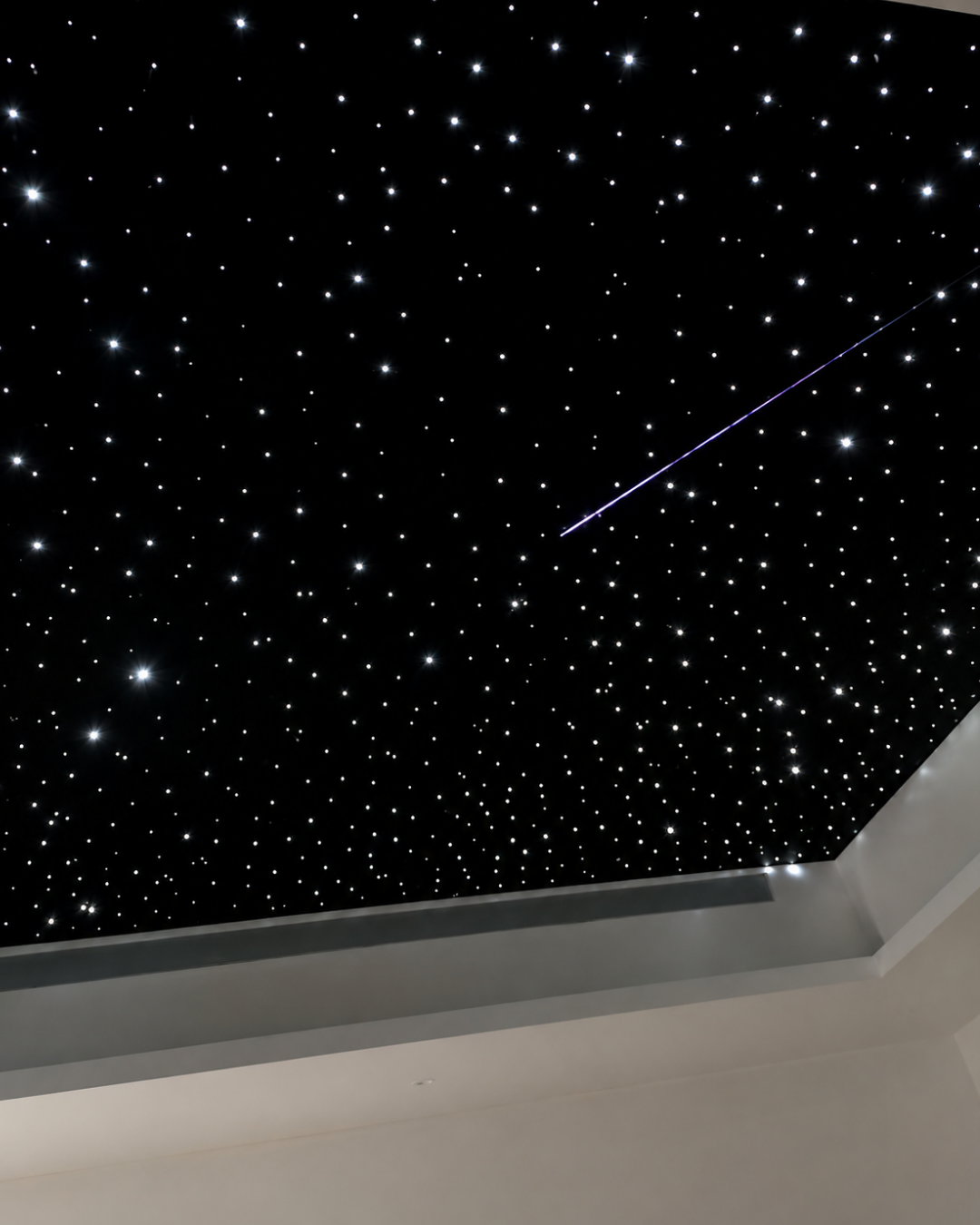
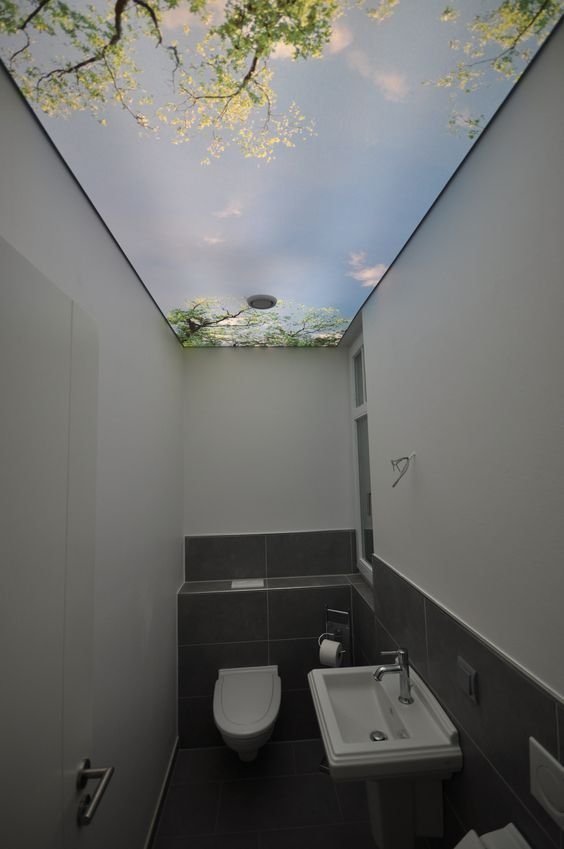
At Barrisol Ceiling, also known as Berrisol & Illusion Decors, ceiling design and lighting can be planned together to create a coordinated interior. Options include stretch ceiling lighting, translucent ceiling systems and custom lighting solutions, depending on the requirements of the project.
Whether you are updating a family lounge, designing a contemporary apartment or planning a more distinctive living room, the ceiling finish should complement the furniture, wall treatments and lighting layout.
The right solution depends on the room’s dimensions, desired brightness, installation conditions and overall design. Discussing these details before work begins helps establish a practical plan for the finished space.
Explore our stretch ceiling lighting solutions and view our project gallery for further inspiration.
Final Thoughts
The best living room lighting ideas combine functionality, comfort and visual appeal. Recessed LED lights, concealed cove lighting, statement chandeliers, linear fixtures and luminous stretch ceilings can all work well when selected for the room’s specific needs.
Instead of relying on one light source, consider layering ambient, task and accent lighting. Pay attention to ceiling height, furniture placement, colour temperature and glare control to create a living room that feels inviting throughout the day.
If you are planning a new ceiling or upgrading your existing lighting, explore the available stretch ceiling options and choose a design that complements your home.
Planning a modern living room ceiling? Contact Barrisol Ceiling to discuss your requirements and book a free site visit.