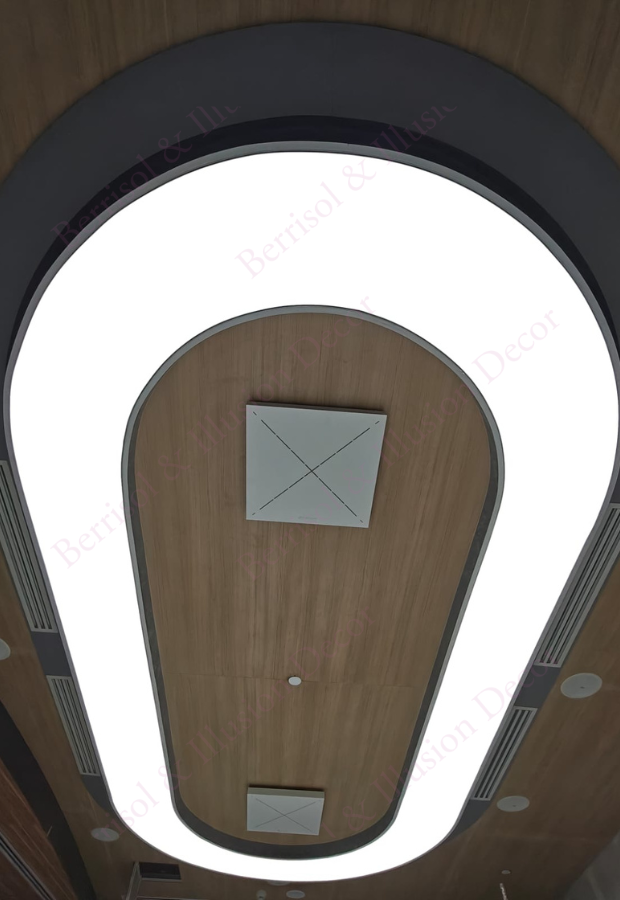
What Is a Stretch Ceiling Light?
A stretch ceiling light is a modern ceiling lighting solution that combines a stretched PVC or fabric membrane with an integrated lighting system. Depending on the design, LED lights may be installed behind a translucent membrane, around the ceiling edges, or within selected sections to create ambient, decorative or functional illumination.
Unlike conventional ceiling lights that hang from a fixture or sit directly against a ceiling, a stretch ceiling lighting system can create a smooth, illuminated surface with minimal visible hardware. It can produce a soft, evenly lit ceiling, highlight architectural features or create distinctive designs for contemporary interiors.
In India, stretch ceiling lighting is increasingly considered for living rooms, bedrooms, offices, showrooms, restaurants, hotels and other spaces where lighting plays an important role in the overall interior design.
In 2026, stretch ceiling lighting can cost approximately ₹300–₹600 or more per sq ft for many customised systems. The final price depends on the membrane, lighting technology, ceiling design, installation requirements and project size. Treat this as an indicative planning range rather than a fixed market rate; a site-specific quotation is needed for an accurate budget.
How Does Stretch Ceiling Lighting Work?
A stretch ceiling lighting system generally consists of three main elements:
Stretch ceiling membrane: A specially selected PVC or fabric surface that creates the visible ceiling finish.
Lighting system: LED strips, modules or panels positioned to provide the required illumination.
Support structure: Perimeter profiles, mounting points and suitable electrical arrangements that hold the system in place.
For a backlit stretch ceiling, the LED sources sit behind a light-transmitting membrane. The membrane diffuses the light, helping create a continuous illuminated appearance instead of a ceiling covered with individually visible light points.
The spacing of the LEDs, distance between the light source and membrane, membrane transparency and light output all affect the final result. Correct planning is important to minimise dark patches, visible hotspots and uneven brightness.
For project-specific options, explore stretch ceiling lighting solutions from Berrisol & Illusion Decors.
Types of Stretch Ceiling Lights
Different stretch ceiling lighting designs serve different purposes. Some provide general room illumination, while others are mainly decorative or help define particular areas.
1. Backlit Stretch Ceiling
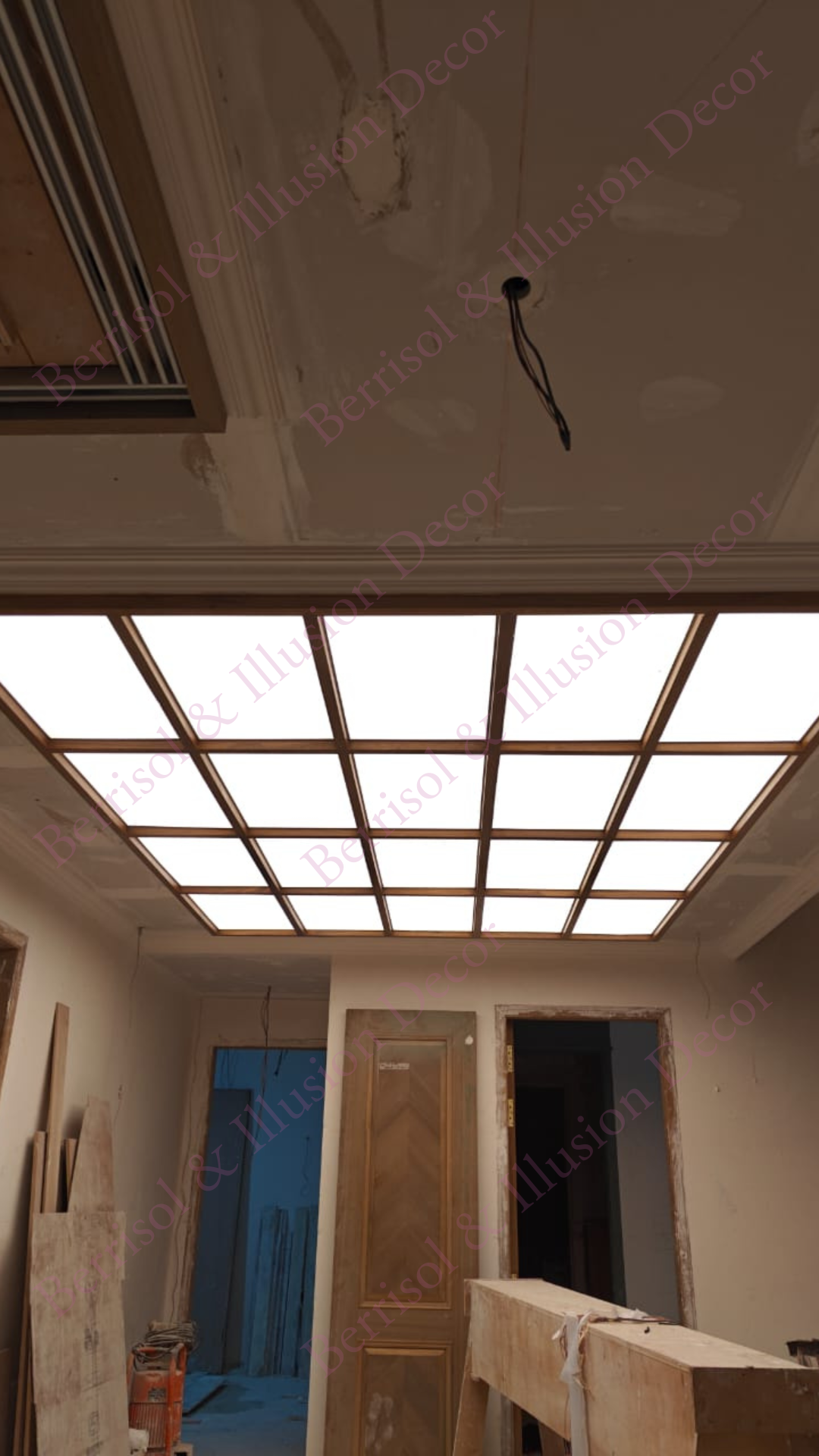
A backlit stretch ceiling uses LED lighting installed behind a translucent membrane. When switched on, the ceiling surface glows, creating a clean and contemporary appearance.
This design works particularly well in living rooms, reception areas, offices, hotel lobbies, salons and commercial interiors.
Best for: A modern ceiling with broad, diffused illumination.
Design tip: Use a carefully planned LED layout and an appropriate translucent membrane to reduce visible hotspots and achieve a more uniform glow.
2. LED Strip Stretch Ceiling Lighting
LED strips can be integrated along ceiling edges, within recessed sections or behind selected ceiling details. They are often used to create indirect lighting that reflects off nearby surfaces rather than shining directly into the room.
Warm-white lighting can create a relaxed residential atmosphere, while neutral-white lighting may suit workspaces and contemporary commercial interiors.
Best for: Bedrooms, living rooms, corridors and modern office interiors.
Design tip: Use concealed LED strips to create a subtle floating-ceiling effect. Include accessible locations for drivers and electrical maintenance.
3. Perimeter or Cove Stretch Ceiling Lighting
Perimeter lighting places LED strips around the edges of a ceiling design. The light can create a visual separation between the ceiling and walls, making the overall arrangement feel lighter and more architectural.
This approach is suitable for homes, apartments, hotels and meeting rooms where softer ambient light is preferred.
Best for: Minimalist interiors and layered lighting schemes.
Design tip: Combine perimeter lighting with task lights or selected downlights where stronger illumination is required.
4. Translucent Stretch Ceiling with Integrated Lighting
A translucent stretch ceiling allows light to pass through its surface. With a suitable lighting layout, the ceiling can become a large illuminated feature rather than simply a background surface.
Depending on the membrane and light source, the finish may appear soft and understated or brighter and more dramatic.
Best for: Reception areas, retail spaces, hospitality interiors and contemporary homes.
Design tip: Choose the membrane and LED colour temperature together. The material changes how the light is diffused and how the final colour appears.
Learn more about translucent stretch ceiling solutions.
5. Printed Stretch Ceiling with Lighting
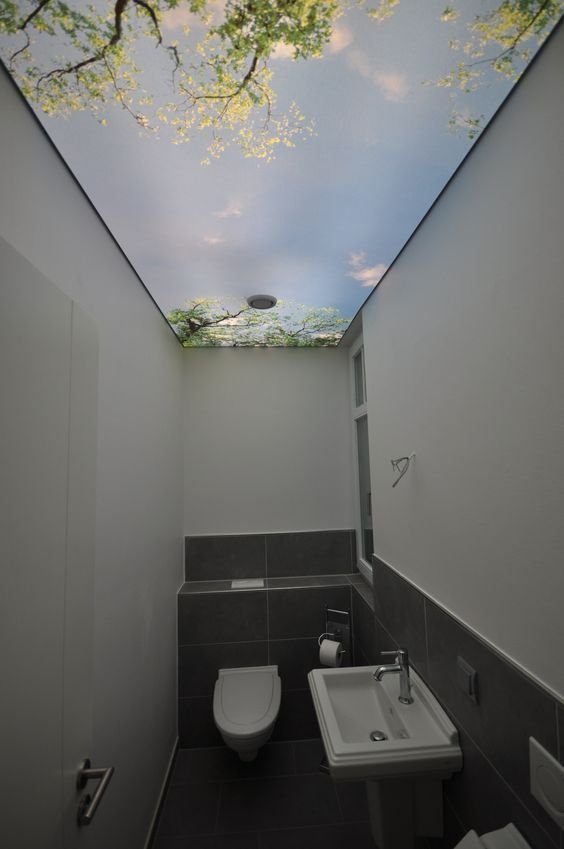
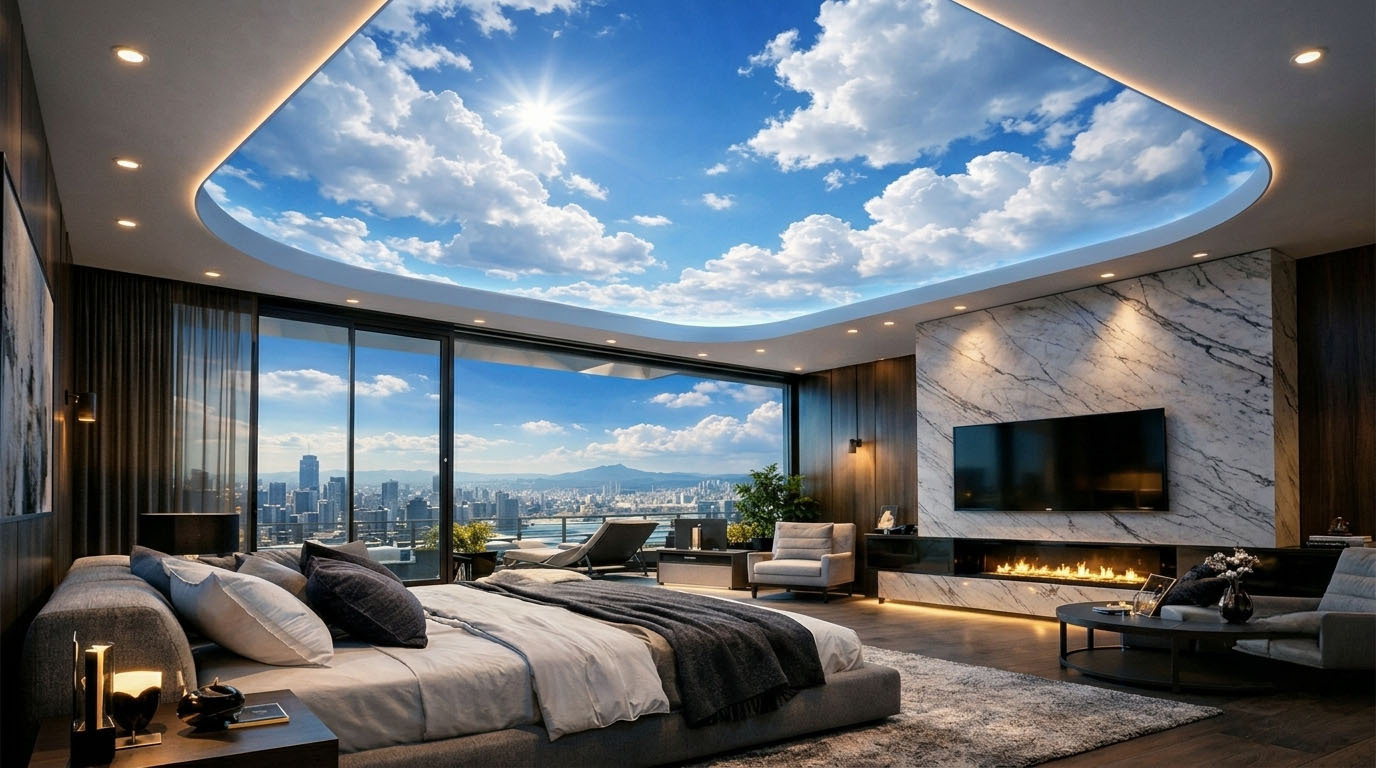
Printed stretch ceilings combine customised graphics with a stretched membrane. Designs may include abstract patterns, geometric artwork, nature-inspired visuals or other imagery suited to the interior.
Lighting can be incorporated into selected designs, particularly when a translucent membrane is appropriate. The printing method and membrane type should be selected according to whether the design needs to remain visible when the lights are on, off or both.
Best for: Feature ceilings, branded commercial spaces, showrooms and creative interiors.
Design tip: Avoid overly busy graphics in small rooms. A restrained design can make a stronger visual impact without overwhelming the space.
See printed stretch ceiling options for ideas.
6. 3D and Decorative Stretch Ceiling Lighting
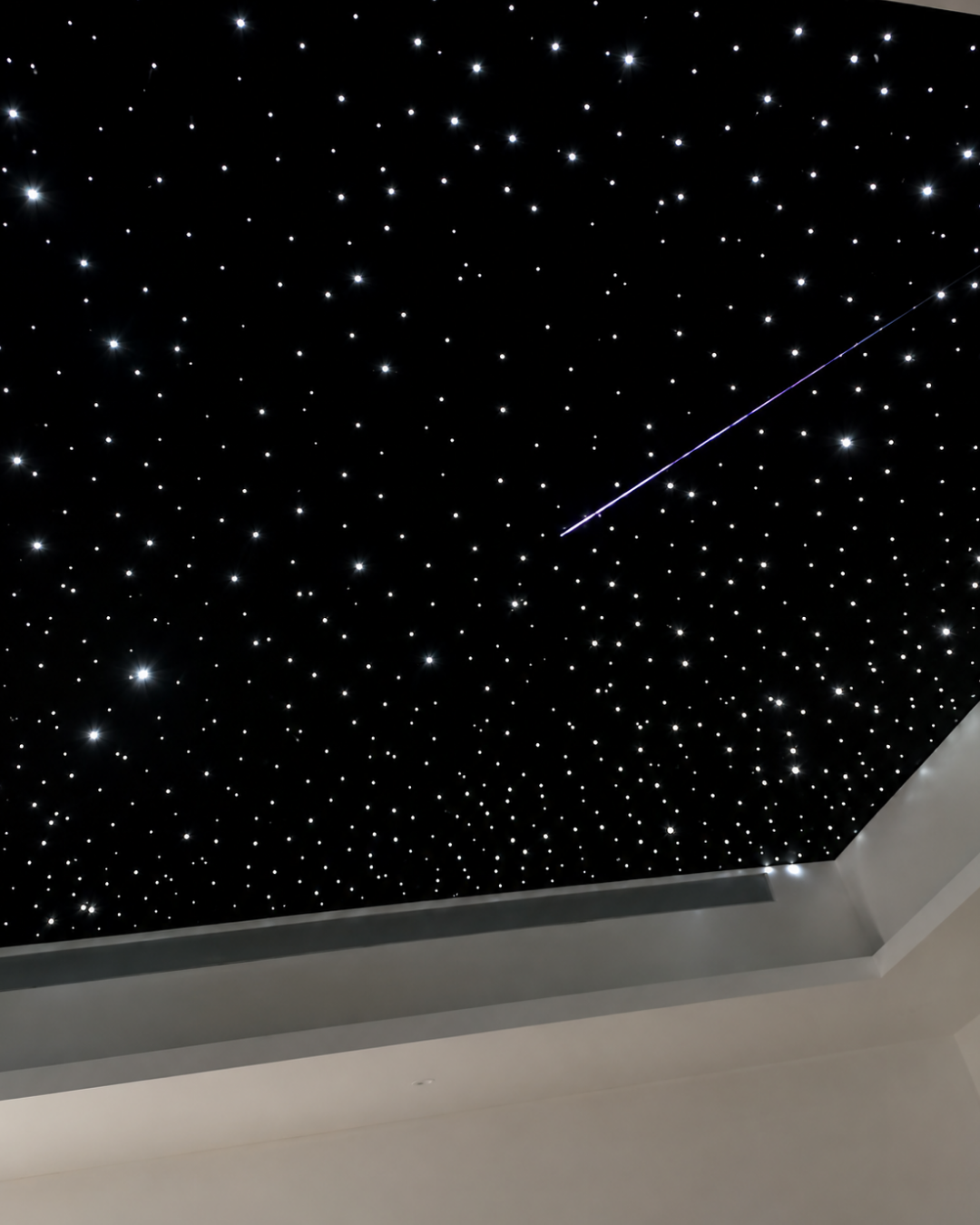
Three-dimensional ceiling designs use shapes, layered effects, printed visuals or architectural detailing to create depth. Lighting can emphasise these features and make them more noticeable.
The result depends on the chosen design, room proportions and lighting placement. Not every 3D design needs full backlighting; targeted illumination may be enough to highlight the main feature.
Best for: Feature walls and ceilings, premium residential interiors, hospitality projects and selected retail environments.
Design tip: Use decorative lighting as a focal point and keep the surrounding ceiling design relatively simple.
Explore 3D stretch ceiling designs for inspiration.
Stretch Ceiling Light Price per Sq Ft in India (2026)
The cost of a stretch ceiling light depends on the type of membrane, LED configuration, ceiling size, design complexity and installation requirements. A simple illuminated ceiling and a customised architectural lighting installation should not be expected to cost the same.
For initial budgeting, the following indicative ranges can help you understand the likely investment.
Stretch ceiling lighting type | Indicative price per sq ft |
Basic stretch ceiling without integrated backlighting | ₹150–₹300 |
Simple stretch ceiling lighting system | ₹300–₹400 |
Custom backlit or illuminated stretch ceiling | ₹350–₹500 |
Advanced architectural or customised lighting design | ₹500–₹600+ |
These are broad planning estimates, not guaranteed quotations. Published supplier listings vary: for example, Berrisol & Illusion Decors has advertised custom stretch ceiling lighting at around ₹359 per sq ft on one trade listing, while another listing shows a price of ₹411.82 per sq ft including GST. Such listings may have minimum order quantities and specific product scopes, so they should not be treated as universal installed rates.
Before comparing quotations, confirm whether the price includes the membrane, aluminium profiles, LED lights, drivers, electrical work, installation, GST and finishing.
Stretch Ceiling Lighting Cost Examples
The following examples use illustrative rates to show how ceiling area affects the budget.
Ceiling area | At ₹350 per sq ft | At ₹500 per sq ft |
100 sq ft | ₹35,000 | ₹50,000 |
150 sq ft | ₹52,500 | ₹75,000 |
200 sq ft | ₹70,000 | ₹1,00,000 |
300 sq ft | ₹1,05,000 | ₹1,50,000 |
These calculations multiply the ceiling area by an assumed rate. They are not final project quotations and exclude any additional work that is not covered by that rate.
For example, a 150 sq ft illuminated ceiling priced at ₹350 per sq ft would have an estimated base cost of ₹52,500. If the quotation excludes electrical work, premium LED controls or additional structural preparation, the final amount will be higher.
What Affects the Price of Stretch Ceiling Lights?
1. Membrane material and finish
PVC and fabric systems differ in their appearance, installation methods and compatibility with particular lighting designs. Gloss, matte, satin, translucent and printed finishes can also have different costs.
2. LED quality and brightness
LED modules, strips and panels vary in brightness, colour consistency, energy use and expected service life. Higher-quality components may cost more initially but can be worthwhile for frequently used spaces.
3. Ceiling design and shape
A straightforward rectangular ceiling is usually simpler to plan than a curved, multi-section or highly customised design. Complex shapes may require additional profiles, preparation and installation time.
4. Lighting controls
Standard on/off lighting is generally simpler than dimmable systems or colour-changing RGB and smart lighting. Check whether compatible drivers and controls are included in the quotation.
5. Ceiling height and site conditions
Access, existing electrical wiring, the condition of the original ceiling and the amount of clearance available can affect installation requirements.
6. Project size and location
Smaller projects may have minimum order or mobilisation charges. Delivery, site access, installation team availability and local project conditions can also influence the final quote.
For a better estimate, request an itemised quotation through the Berrisol & Illusion Decors contact page.
Modern Stretch Ceiling Light Design Ideas for Different Rooms
The most effective stretch ceiling design is one that suits the room's purpose, natural light, dimensions and interior style. Here are some ideas to consider.
1. Living Room Stretch Ceiling Lighting
A backlit ceiling can create a striking focal point in a modern living room. For a more understated appearance, combine concealed perimeter lighting with selected downlights.
In a large living room, an illuminated ceiling panel can help define the seating area. In a smaller room, a simpler layout with warm-white lighting can keep the design balanced.
Recommended approach: Use diffused lighting for ambience and add task or accent lights where reading and other activities require more focused illumination.
2. Bedroom Stretch Ceiling Lights
Bedrooms usually benefit from lighting that feels comfortable rather than overly bright. A warm-white LED strip around the ceiling perimeter or a softly illuminated ceiling section can create a relaxing atmosphere.
You can also use a simple stretch ceiling above the main bed area, with separate bedside lights for reading.
Recommended approach: Consider dimmable lighting so the room can be adjusted for different activities. Make sure the driver and control system support the intended dimming method.
3. Kitchen Stretch Ceiling Lighting
Kitchen lighting must support practical tasks such as food preparation and cleaning. A stretch ceiling may contribute to general illumination, but it should be planned alongside suitable task lighting.
Use lighting that provides good visibility over worktops and food preparation areas. Check the suitability of the membrane, electrical components and installation arrangement for the kitchen's temperature, ventilation and moisture conditions.
Recommended approach: Prioritise functional brightness and easy maintenance over decorative effects alone.
4. Office Stretch Ceiling Lighting
In offices, the ceiling lighting should help create a comfortable and productive working environment. Uniform illumination can work well in reception areas, meeting rooms and collaborative spaces.
A backlit stretch ceiling may provide a distinctive design feature, while supplementary lighting may be needed at desks or in rooms used for detailed work.
Recommended approach: Consider glare, screen reflections, brightness distribution and the lighting requirements of the actual work being performed.
5. Hotel Lobby and Reception Lighting
Hotels and reception areas often use ceiling lighting to establish the character of a space. An illuminated ceiling can create a clean, contemporary impression, while carefully positioned accent lighting can draw attention to architectural features.
Recommended approach: Coordinate the ceiling design with wall finishes, flooring, reception counters and signage. The lighting should support the overall interior concept rather than compete with it.
6. Retail Store and Showroom Lighting
In retail spaces, lighting influences how products, colours and finishes appear. A stretch ceiling lighting system can provide general illumination or create a branded architectural feature.
Product displays may still need dedicated accent lighting, as a uniformly illuminated ceiling alone may not provide the contrast needed to highlight merchandise.
Recommended approach: Plan general lighting and display lighting together, and choose colour characteristics appropriate for the products on show.
7. Restaurant and Café Stretch Ceiling Lighting
Restaurants and cafés often need different lighting levels across dining areas, counters and circulation routes. Warm ambient lighting can create a relaxed dining atmosphere, while brighter task lighting may be needed behind counters or in service areas.
Recommended approach: Consider dimming, maintenance access and the effect of lighting on the interior's colours and textures.
How to Choose the Right Stretch Ceiling Light
Before finalising a design, consider the following practical points.
Start with the purpose of the room
Decide whether the ceiling needs to provide general illumination, create ambience, highlight a design feature or combine several functions. This will help determine the type of membrane and lighting layout.
Choose the right colour temperature
Warm-white lighting often suits bedrooms and relaxed living areas. Neutral-white lighting may be appropriate for offices, kitchens and other task-focused environments. The best choice depends on the interior finishes and intended atmosphere.
Plan the light distribution
A translucent membrane does not automatically guarantee uniform illumination. The installer should consider LED spacing, output, diffusion, mounting depth and the size of the illuminated surface.
Check electrical access and maintenance
LED drivers, connectors and control equipment may need inspection or replacement during the system's life. Ask how these components will be accessed without unnecessary damage to the ceiling.
Confirm material and safety specifications
Ask for details about the membrane, LED components, electrical protection and any relevant fire-performance documentation required for your project. Do not assume that every stretch ceiling system has the same certifications or performance characteristics.
Review a sample or completed installation
A physical material sample or a visit to a completed project can help you judge the finish, light diffusion and overall quality more accurately than a digital image alone.
Stretch Ceiling Lights vs Conventional False Ceiling Lighting
Both systems can be effective, but they offer different design possibilities.
Feature | Stretch ceiling lighting | Conventional false ceiling lighting |
Appearance | Can create a smooth, seamless or illuminated surface | Can accommodate layered shapes, coves and recessed fixtures |
Design options | Translucent, printed, matte, gloss and customised finishes, depending on the system | Painted surfaces, cut-outs, coves and varied board designs |
Lighting integration | Backlighting and selected integrated lighting arrangements | Recessed lights, LED strips and other fixtures |
Installation approach | Uses a membrane and dedicated perimeter profiles | Commonly uses a framed gypsum, POP or other ceiling construction |
Maintenance | Depends on membrane access and lighting system design | Depends on fixture access, ceiling construction and finishing |
Cost | Varies by membrane, lighting and customisation | Varies by board or material, design, lighting and labour |
Neither option is automatically better for every room. The right choice depends on the required appearance, ceiling height, project budget, lighting performance and maintenance needs.
Is a Stretch Ceiling Light Worth the Investment?
A stretch ceiling light may be worth considering when the goal is to combine architectural design with integrated illumination. It can provide a distinctive finish for living rooms, bedrooms, hospitality interiors, showrooms and commercial reception spaces.
However, the value depends on how well the system meets the project's needs. A premium illuminated ceiling may not be necessary in every room, and it should not replace task lighting where focused brightness is essential.
Before deciding, compare the complete installed cost, expected lighting use, component specifications, maintenance arrangements and design suitability. A well-planned system is more useful than an elaborate design that does not suit the space.
Why Consider Berrisol & Illusion Decors for Stretch Ceiling Lighting?
Choosing the right supplier and installation partner is an important part of achieving a good result. The membrane, profiles, lighting components and installation quality all influence how the ceiling looks and performs.
Berrisol & Illusion Decors offers stretch ceiling and integrated lighting solutions for residential and commercial interiors. Its options include illuminated ceilings and customised lighting designs intended to complement different types of spaces.
When planning a project, discuss the following with the team:
The most suitable membrane and finish for your room.
Whether a backlit, perimeter-lit or customised lighting design is appropriate.
The proposed LED layout and how evenly the surface will be illuminated.
The ceiling area, installation requirements and itemised cost.
Access for electrical maintenance and replacement of lighting components.
Relevant material specifications and warranty terms for the proposed system.
Explore the company's stretch ceiling lighting solutions to understand the available design approach, then request a project-specific recommendation.
Final Thoughts
Stretch ceiling lighting offers a flexible way to combine ceiling design and illumination in modern Indian interiors. From softly backlit living rooms to functional office ceilings and customised commercial installations, the right solution depends on the space, the lighting requirements and the finish you want to achieve.
For 2026 budgeting, use ₹300–₹600+ per sq ft as an indicative range for many stretch ceiling lighting systems, then confirm exactly what the supplier includes. Membrane quality, LED specifications, design complexity and installation conditions can all change the final cost.
Berrisol & Illusion Decors can be considered for customised stretch ceiling and lighting requirements. Share your ceiling dimensions, preferred design and project location to discuss suitable options and obtain a detailed quotation.
Planning a stretch ceiling lighting project? Contact Berrisol & Illusion Decors to discuss your requirements and request a project-specific estimate.