Arkitektur
Stet no et lorem dolor et diam, amet duo ut dolore vero eos. No stet est diam rebum amet diam ipsum. Clita clita labore, dolor duo nonumy clita sit at, sed sit sanctus dolor eos.
123 Street, New York, USA
+012 345 67890


Stet no et lorem dolor et diam, amet duo ut dolore vero eos. No stet est diam rebum amet diam ipsum. Clita clita labore, dolor duo nonumy clita sit at, sed sit sanctus dolor eos.
123 Street, New York, USA
+012 345 67890
Confused between PVC stretch ceiling and fabric stretch ceiling? Explore key differences, pros, and cons to choose the best stretch ceiling for your interior design.
When it comes to modern interior design ceiling solutions, stretch ceilings have become a revolutionary choice. Among the most popular options are PVC stretch ceilings and fabric stretch ceilings, both known for their aesthetic appeal, durability, and versatility. But which one should you choose for your home or commercial space?
This guide provides a detailed ceiling comparison between PVC and fabric stretch ceilings — highlighting their differences, benefits, installation process, and maintenance — to help you make an informed decision.
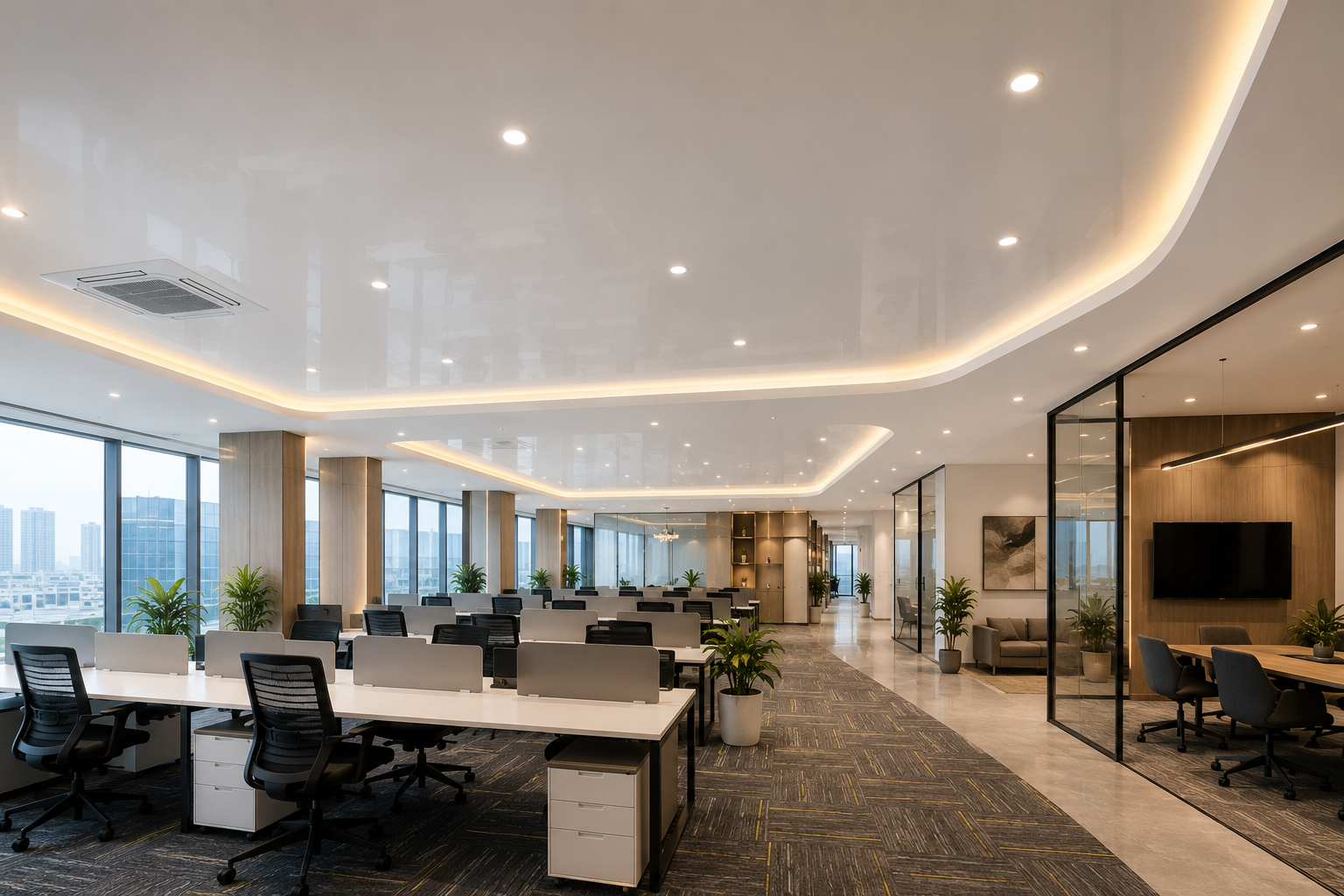
A PVC stretch ceiling is made of a lightweight polyvinyl chloride film that is stretched and fixed onto a perimeter track. The result is a perfectly smooth, flawless ceiling surface that can be customized in various colors, textures, and finishes — from glossy and matte to translucent and metallic.
These ceilings are especially popular in modern homes, showrooms, offices, and hotels due to their reflective finish, moisture resistance, and cost-effectiveness. They are also compatible with false ceiling lights, creating an elegant lighting ambiance.
A fabric stretch ceiling, on the other hand, is made from a polyester-based material coated with polyurethane. Unlike PVC, the fabric is not heated during installation — it is stretched at room temperature and fixed to a perimeter frame.
Fabric stretch ceilings are often chosen for their seamless appearance and acoustic properties. They are ideal for large spaces like auditoriums, galleries, and luxury homes where a more natural or soft ceiling texture is preferred.
Highly Customizable:
The PVC stretch ceiling offers endless design flexibility. You can choose from hundreds of shades and finishes, including high-gloss, matte, and printed textures.
Waterproof and Moisture-Resistant:
Ideal for bathrooms, kitchens, and swimming pool areas — the PVC material prevents mold or mildew growth.
Easy Maintenance:
Cleaning is effortless; a simple wipe with a microfiber cloth keeps it looking new.
Reflective and Bright:
The glossy finish reflects light, making rooms appear brighter and more spacious.
Affordable Option:
Among all interior design ceiling options, PVC stretch ceilings are budget-friendly while still looking premium.
Seamless and Elegant Finish:
Fabric ceilings cover large spaces without visible joints, giving a luxurious and smooth appearance.
Acoustic Comfort:
The fabric material helps absorb sound, reducing echoes and improving the acoustic environment in offices, theaters, or bedrooms.
Temperature Stability:
Fabric ceilings are resistant to temperature fluctuations, making them suitable for both hot and cold climates.
Environmentally Friendly:
Most fabric stretch ceiling materials are PVC-free and recyclable, making them eco-conscious choices.
Long-Lasting and Fade-Resistant:
High-quality fabric ceilings do not yellow or fade over time, maintaining their color and texture for decades.
Your choice between PVC stretch ceiling and fabric stretch ceiling depends largely on your design goals, budget, and usage needs. Here’s how you can decide:
PVC Stretch Ceiling Installation:
The PVC film is heated to around 70–80°C.
It is then stretched across an aluminum track system and clipped into place.
After cooling, it tightens to form a smooth, even ceiling.
Fabric Stretch Ceiling Installation:
The fabric is stretched cold without heating.
It is fixed into a perimeter track using a harpoon or clip system.
No joints or welding are needed, resulting in a seamless appearance.
Both options can integrate LED lights, spotlights, and backlit panels for stunning effects.
Both types of stretch ceilings require minimal maintenance:
PVC Stretch Ceiling: Clean with a soft damp cloth and mild detergent. Avoid sharp objects.
Fabric Stretch Ceiling: Vacuum gently or dry-clean periodically to remove dust.
With proper care, PVC ceilings last around 10–15 years, while fabric ceilings can last over 20 years.
Both PVC stretch ceiling and fabric stretch ceiling options enhance interiors with elegance, versatility, and functionality.
If you prioritize affordability, waterproofing, and glossy finishes, go for PVC stretch ceilings.
If you value acoustics, seamless design, and eco-friendliness, fabric stretch ceilings are the right choice.
Whichever you choose, a professionally installed stretch ceiling will transform your space — giving it a sophisticated, modern, and durable finish that traditional false ceilings cannot match.
Q1: Can PVC stretch ceilings be used in bathrooms or kitchens?
Yes. PVC stretch ceilings are 100% waterproof and ideal for moisture-prone areas.
Q2: Are fabric stretch ceilings more expensive than PVC?
Yes, fabric stretch ceilings are generally 15–20% costlier due to material quality and seamless design.
Q3: Which ceiling is easier to maintain?
PVC stretch ceiling is easier to clean with regular wiping, while fabric stretch ceilings require dry cleaning.
Q4: Can lighting be integrated into both ceiling types?
Absolutely. Both PVC and fabric stretch ceilings can accommodate LED lights, chandeliers, and backlit effects.
Q5: Which option is better for large rooms?
A fabric stretch ceiling is better for large spaces since it offers a seamless, joint-free look.
Berrisol & Illusion Decors is a leading stretch ceiling and false ceiling contractor in Delhi, offering premium PVC, 3D, and backlit ceiling solutions. We deliver modern designs with high-quality materials for residential and commercial spaces.
C- 46 2nd floor,DDA sheds , pocket A, Okhla Phase 1 ,New Delhi ,110020
+91 9540593079